
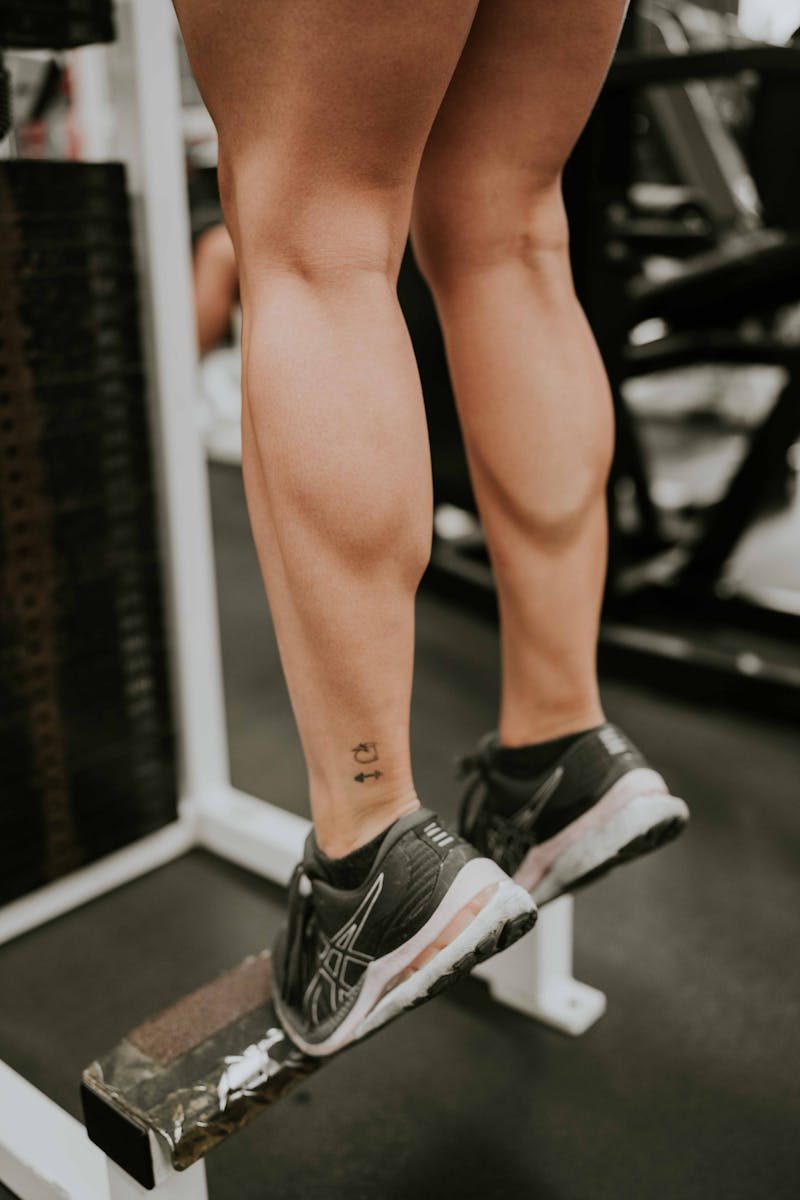
In the world of athletic performance and injury prevention, the achilles tendon often takes center stage. But next comes imaging and talking about tendon health and surgical options. We never ask the question, how did we get here. Lets not make a list of excuses like being old or playing a sport too often, but rather lets take a look at where it all started.
When it comes to powerful movements like running, jumping, and sprinting, the achilles is undeniably crucial. However, what many athletes and even some rehabilitation professionals overlook is the true powerhouse behind this mighty tendon: the calf muscles, particularly the soleus.
Drawing on the extensive research and clinical insights of Dr. Seth O’Neill, a leading expert in achilles tendon health, I believe you can start to shift your focus. The health and resilience of your achilles tendon are not just about the tendon itself; they are profoundly dictated by the strength and endurance of your calf muscles.
Chronic calf weakness, especially in the soleus, is the hidden engine that, when underpowered, can lead to a cascade of problems, from nagging pain to catastrophic achilles ruptures.
Arguably, this is the most important thing for you to know in any chronic achilles tendinopathy whether insertional or mid-portion.
The Unsung Hero: Your Soleus Muscle
When we talk about calf muscles, most people immediately think of the gastrocnemius, the large, visible muscle that gives the calf its aesthetic shape. While the gastrocnemius plays a role, the soleus as the true workhorse of the lower leg. The soleus is a deep muscle, lying beneath the gastrocnemius, and it is uniquely designed for sustained force production and absorbing significant loads during movement.
Consider the forces at play during everyday activities and athletic endeavors. Research indicates that during running, the soleus can generate forces equivalent to 6.5 to 8 times your body weight, and during acceleration phases, this can surge to an astonishing 10 times your body weight .
In stark contrast, the gastrocnemius typically handles only about 3 times body weight during steady-state running. This dramatic difference underscores the soleus’s unparalleled importance in propulsion and shock absorption, which can prevent future achilles issues.
More Than Just Aesthetics: The Link to Injury Prevention and Performance
For too long, calf training has been relegated to an afterthought, often pursued for aesthetic reasons rather than its profound impact on functional strength and injury resilience.
Calf strength is not merely about how your legs look; it is a direct determinant of your ability to prevent injuries and optimize performance. A weak soleus means the achilles tendon is forced to bear disproportionately higher loads, making it vulnerable to overuse, degeneration, and ultimately, rupture.
The older we get the stronger our soleus needs to be as our tendons are not as healthy or flexible as they used to be when we were younger.
Furthermore, the strength of your calf muscles, particularly the soleus, has a direct correlation with athletic metrics such as sprint speed and change of direction. This isn’t just about preventing injury; it’s about unlocking your full athletic potential and winning championships.
The Anderson Performance Rehab Approach
At Anderson Performance Rehab, we integrate evidence-based principles into our assessment and treatment protocols and then take it to the next level. We understand that addressing achilles issues requires looking beyond the tendon structure itself and meticulously evaluating the strength and function of your calf complex. By addressing the brain/neuro component of injury as well as the muscle strength deficit our programs get athletes back faster, period. Our programs aim to:
•Identify and address chronic calf weakness: Utilizing objective measures to pinpoint deficiencies. (The first place to check is actually the brain.)
•Prioritize soleus strengthening: Implementing targeted exercises that build the foundational strength needed for achilles health. (Hint: going UP on your toes doesn’t help enough.)
•Progressive loading: Guiding you through a carefully structured program that gradually increases the load on your achilles and calf, preparing you for the demands of your sport and daily life.
Don’t let an underpowered hidden engine compromise your performance or lead to debilitating injuries. Understand that your calf strength is not just a component of your achilles health; it dictates the very abilities of your tendon to absorb force and win championships.
Comments are closed for this post.